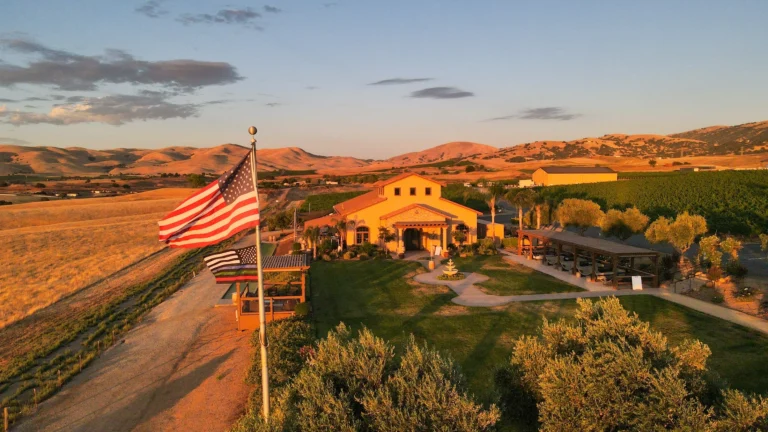

There’s something special about sipping wine in a place where vines have been growing for over 150 years. Livermore Valley sits among California’s oldest wine regions, and its history isn’t buried in textbooks. It’s alive in the soil, the families, and the bottles still being made here today.
This blog will discuss the Livermore Valley wine history, the pioneering families who shaped it, the challenges that tested it, and what makes this corner of California so worth raising a glass to.
Table of Contents
How Livermore Valley Became One of California’s First Wine Regions
Long before Napa became a household name, Livermore Valley was already producing wine. Spanish missionaries moving through California in the early 19th century planted some of the first vines in the region, introducing grapes to land that turned out to be extraordinarily well-suited for growing them. By the 1840s and 1850s, settlers moving into the valley recognized its agricultural promise and started planting in earnest.
The land rush of the mid-to-late 1800s brought farmers, ranchers, and visionary winemakers west. What drew them wasn’t opportunity alone. It was the terrain itself. Livermore’s warm growing season, reliable sun, and uniquely structured soils made wine production feel less like a gamble and more like a natural fit. By the time California wine regions were taking shape, Livermore was already well ahead of the conversation.
The Founding Families Who Shaped the Valley’s Wine Legacy
The names that built this valley are worth knowing. In 1882, Charles Wetmore founded Cresta Blanca Winery, bringing vine cuttings directly from France’s Graves region and setting an early standard for serious winemaking in California. His commitment to quality earned Cresta Blanca international recognition, including a gold medal at the 1889 Paris Exposition.
Just a year later, in 1883, Carl Heinrich Wente arrived in Livermore and planted his first vines. The Wente family never left. Their winery continues operating today, making them one of the oldest continuously family-operated wineries in the country. Around that same time, James Concannon established Concannon Vineyard, another name that became synonymous with the valley’s identity. Concannon is widely credited with helping introduce Petite Sirah as a recognized varietal in California.
These historic wineries in Livermore didn’t just make wine. They built the cultural and agricultural foundation that every winery in the valley, including McGrail Vineyards, now stands on.
Prohibition and the Years That Tested the Valley’s Roots
When Prohibition arrived in 1920, it hit wine production in Livermore Valley hard. Wineries that had spent decades building their reputations were forced to pivot or shut down entirely. Some survived by producing sacramental wine for religious use, a legal exception that kept a handful of operations alive through the dry years. Others sold grapes directly to home winemakers, who were permitted to produce small amounts for personal use.
When the Repeal took effect in 1933, the valley began to rebuild. Recovery was slow. Certain vine stock, institutional knowledge, and winery infrastructure never fully returned. The families who chose to stay needed real patience to bring the valley back to life.
The Mid-Century Shift and the Fight to Preserve the Land
The decades after World War II brought a different kind of pressure. Suburban development spread rapidly across the Bay Area, and Livermore Valley’s vineyard land sat directly in the path of expansion. Through the 1960s and 1970s, housing developments crept steadily closer to the vines.
Local growers and farming families pushed back hard. They organized, advocated, and made the case that this land had a purpose worth protecting. Their efforts contributed directly to the establishment of the Livermore Valley AVA in 1982, an official designation recognizing the valley as a distinct American Viticultural Area with its own terroir and winemaking identity. The Livermore Valley Winegrowers Association was central to that fight, and the designation became a turning point that anchored the region’s place among California wine regions in a formal, lasting way.
What Makes Livermore Valley’s Terroir So Special

The soil here tells its own story. Livermore’s gravelly, well-drained earth shares its character with France’s Graves region, and not by coincidence. Charles Wetmore literally brought cuttings from there in the 1880s. That same soil structure continues shaping the wines grown here today.
Warm days and cool afternoon winds off the San Francisco Bay define the growing season, giving grapes enough heat to ripen fully while preserving the acidity that keeps wines fresh and balanced. Cabernet Sauvignon thrives in these conditions, as does Chardonnay, and both have become signatures of the valley. Every bottle in our estate wine collection reflects this land.
McGrail Vineyards and the Modern Chapter of Livermore Wine

We came to this valley because we believed in what it could grow. The McGrail family planted roots here with a clear focus: estate-grown fruit, hands-on winemaking, and wines that genuinely reflect the land they come from. We’re one chapter in a much longer story, and we take that seriously.
Our tasting room sits right inside that story. Guests don’t just taste wine here. They taste the valley’s history in every glass. When we pour a Cabernet Sauvignon grown on our hillside estate, we’re pouring something connected to everything Wetmore, Wente, and Concannon started more than a century ago. Come visit and see what we mean. Great memories are still being made where history grows on the vine.
FAQs
What is the oldest winery in Livermore Valley?
Wente Vineyards and Concannon Vineyard both trace their founding to the 1880s, placing them among the oldest continuously operating wineries in California.
When did Livermore Valley become an official wine appellation?
The Livermore Valley received its AVA designation in 1982. The appellation helped protect the valley’s agricultural identity and gave its wines a recognized place within California’s broader wine story.
Why is Livermore Valley important to California wine history?
Livermore Valley is one of California’s earliest commercial wine-producing regions, with roots stretching back to the 1880s. It represents a direct line between 19th-century European winemaking traditions and the modern California wine industry.
Take Your Next Sip at McGrail
The history of wineries in Livermore Valley isn’t a closed chapter. It keeps growing, season by season, vintage by vintage. We’d love for you to come be part of it.
Visit us at McGrail Vineyards, see the history come alive, and raise a glass to everything this valley has built.